
Economy
Affordable Housing Expansion Underway in Pictou

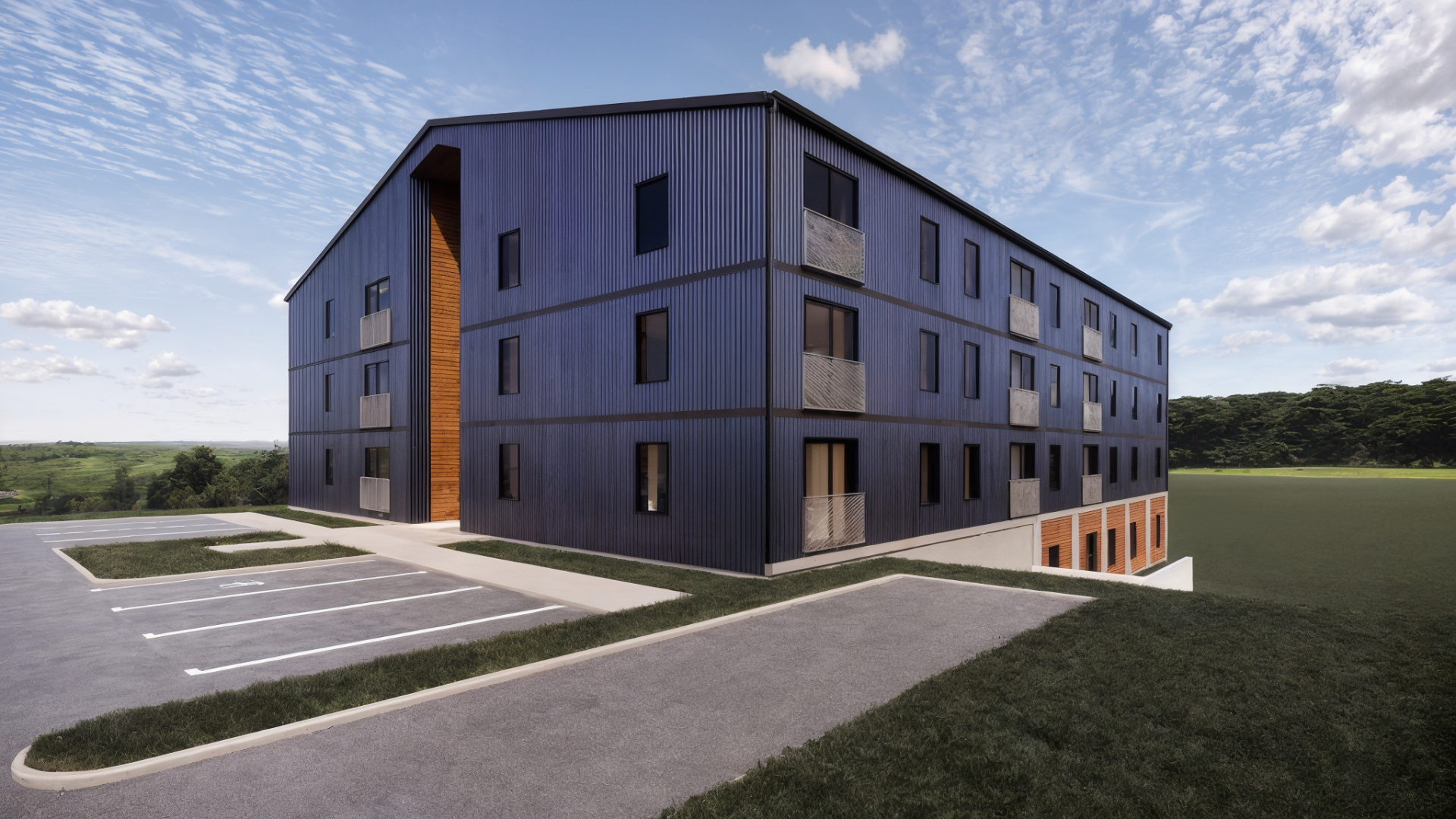
The landscape of affordable housing in Pictou is seeing a significant shift as construction begins on a new 27-unit development on Beeches Road, part of a broader provincial effort to increase long-term housing stability.
The announcement was made Friday by Marco MacLeod, MLA for Pictou West, on behalf of Housing Minister John White. The Beeches Road project, a partnership between the Province, the federal government, and the Tidal Bay Community Land Co-operative, aims to provide a mix of market-rate and permanently affordable homes.
More housing is on the way for Pictou, and more residents will soon have a place to call home.
— Tim Houston (@TimHoustonNS) March 21, 2026
Our government is proud to support the construction of a new 27-unit development on Beeches Road, including 11 homes that will remain affordable permanently, helping provide long-term… pic.twitter.com/cm7LH49X0w
Stability Through Affordability
Of the 27 units currently under construction, 11 are designated as permanently affordable. This unique structure ensures that these homes remain accessible for generations, rather than expiring after a set number of years.
“Each new home strengthens our community, and these 27 units are more than a construction project – they are future homes for people in Pictou,” said Pictou West MLA MacLeod. “By working with our partners, we’re helping to give people a home where they can build their lives, raise their families, and stay connected to the community they love.”
The financial breakdown for the Beeches Road development includes:
- Federal Government: $9.4 million via the Affordable Housing Fund.
- Province of Nova Scotia: $1.639 million via the Affordable Housing Development Program.
- Tidal Bay Community Land Co-operative: $390,958.
Rent for the affordable units is set at $785 for one-bedroom, $912 for two-bedroom, and $1,140 for three-bedroom units. Notably, these rates are inclusive of electricity, heat, hot water, laundry, and parking.
Stonehouse Manor

The announcement also highlighted the completion of Stonehouse Manor, a 132-year-old historic municipal building in downtown Pictou that has been repurposed into 15 residential units.
The conversion, which is already fully occupied, provides 10 affordable units. This project was made possible through a $1 million provincial contribution, $1.3 million from the federal government, and $237,350 from the Nova Scotia Co-operative Council.
The dual announcements represent a multi-million dollar investment aimed at addressing the diverse housing needs of the North Shore, blending historic preservation with modern new builds.


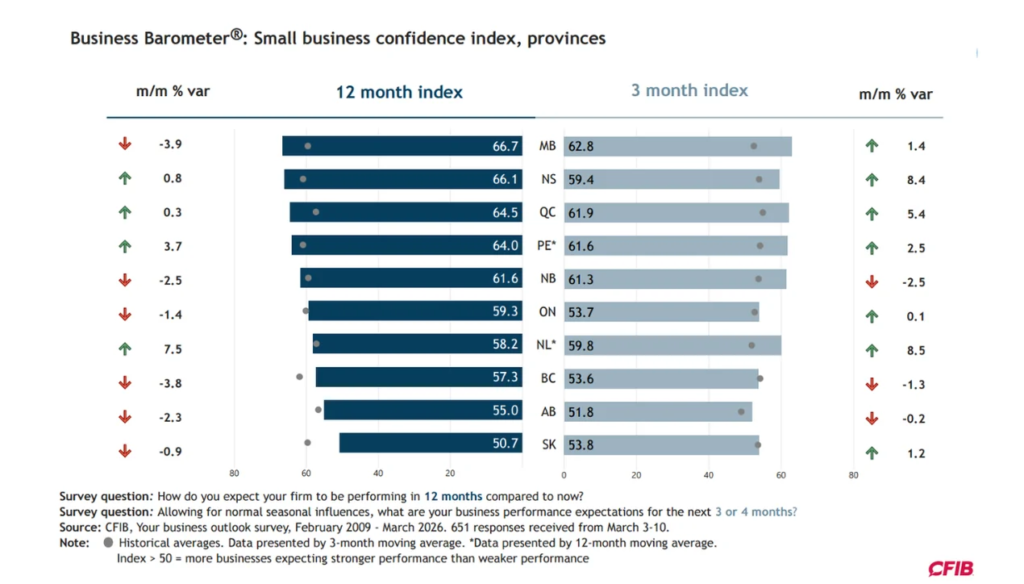
Nova Scotia’s small business community is showing renewed optimism, ranking second highest in the country for confidence, according to the latest Monthly Business Barometer released by the Canadian Federation of Independent Business (CFIB).
The March 2026 report highlights a notable shift in sentiment among small and medium-sized enterprises (SMEs), with Nova Scotia emerging as one of the strongest-performing provinces in Canada. The CFIB’s Business Barometer is a widely followed indicator that measures business owners’ expectations for their performance over the next 12 months, with scores above 50 indicating optimism.
Strong showing despite national dip
Nationally, small business confidence declined in March, with the long-term index falling to 55.8 and the short-term outlook also weakening.
However, Nova Scotia stood out as a bright spot, maintaining relatively strong confidence compared to most other provinces. Provincial trends showed that while many regions experienced declines, Nova Scotia saw stable or slightly improved sentiment, helping it secure a top-tier ranking nationwide.
Atlantic resilience
The Atlantic region continues to demonstrate resilience, with Nova Scotia’s performance reflecting a broader trend of cautious optimism among local entrepreneurs. Earlier in 2026, confidence levels in Nova Scotia were already among the stronger in Canada, with business sentiment climbing alongside provinces like Quebec and New Brunswick.
Outlook
While uncertainty remains in the broader economic environment, Nova Scotia’s strong ranking signals confidence in future growth and stability. As CFIB’s latest data shows, Nova Scotia’s entrepreneurs are not just weathering current challenges—they are positioning themselves as among the most optimistic in the country heading into the year ahead.

Nova Scotia’s PC government will reinstate $53.6 million in grants and funding for the 2026-27 fiscal year, restoring support for programs that assist seniors, people with disabilities and education initiatives serving African Nova Scotian and Indigenous communities.
Premier Tim Houston said the decision follows feedback from Nova Scotians who made it clear how important these supports are to communities across the province.
“Nova Scotians have spoken. We listened, and we are reinstating supports to disabilities programming, seniors programming and African Nova Scotian and Indigenous students. These are grants that help people meet their basic daily needs,” said Premier Houston.
The reinstated funding includes $21.4 million in grants aimed at supporting seniors and people with disabilities, while also helping African Nova Scotians and Indigenous people access educational opportunities.
In addition, $10 million will be restored for organizations that provide direct support and services to those communities.
The province is also re-establishing $22.2 million in funding for community programs, ensuring continued support for initiatives serving seniors, disability groups, and African Nova Scotian and Indigenous communities.
While the government is restoring these programs, Premier Houston noted that the province continues to balance priorities within its current fiscal situation.
“We wish we could do more,” he said. “We will continue to look for opportunities to support all Nova Scotians as our fiscal picture improves.”
Together, these investments aim to strengthen programs that help many Nova Scotians meet their daily needs and access opportunities in their communities.
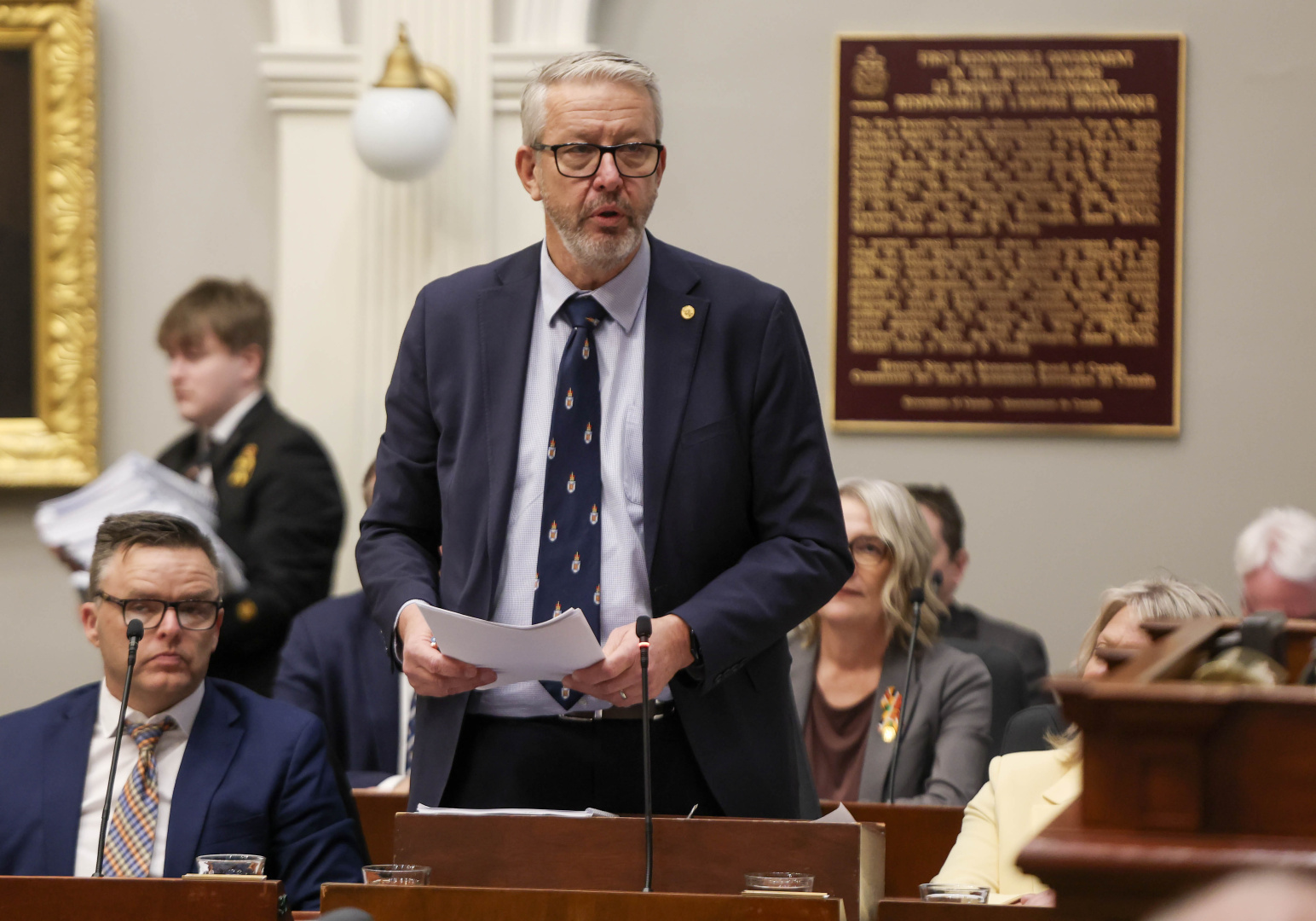
As global uncertainty continues to shape local realities, the Nova Scotia PC government says Budget 2026–27 is designed to defend and strengthen the province for the years ahead.
Over the past several years, Nova Scotians have experienced firsthand how quickly international events, from supply chain disruptions to inflation, can affect daily life at home. In response, government leaders point to significant investments aimed at addressing what they describe as a decade of underspending in healthcare, housing, affordability measures, and aging infrastructure.
Budget 2026–27 builds on that approach, with a focus on economic growth, community resilience, healthcare transformation, and long-term financial sustainability.
Today we tabled our 2026-27 budget, “Defending Nova Scotia: A Plan for the Long Term”. In the face of global uncertainty due to Donald Trump’s trade war, this is a plan that controls spending while continuing to invest in healthcare, housing, and growing Nova Scotia’s economy.… pic.twitter.com/eQ15d8UfQw
— Tim Houston (@TimHoustonNS) February 23, 2026
Growing the Economy in Key Sectors
Nova Scotia is well positioned to meet growing global demand in several strategic industries. The budget outlines targeted investments to create conditions that attract private capital and stimulate job creation.
Six priority sectors are identified as central to long-term economic growth:
- Defence and aerospace
- Clean and conventional energy
- Forestry and mining
- Fisheries and agri-food
- Housing and construction
- Artificial intelligence and the digital economy
Expanding these industries will not only diversify trading partnerships but also strengthen Nova Scotia’s role in global supply chains.
Affordability and Community Safety
Budget 2026–27 also introduces measures aimed at improving affordability and strengthening communities.
Among the headline commitments is tax relief expected to save the average Nova Scotian family more than $1,400 annually. The government has also committed to making the School Lunch Program universally available to students across the province.
Housing access remains a key focus, with continued investments to increase supply and address demand pressures.
In addition, the province is enhancing coordination around community safety and emergency management, with updated approaches to disaster preparedness and response.
Continuing the Healthcare Transformation
Healthcare remains one of the largest areas of investment.
Through its four-year Action for Health plan, 2022 to 2026, the government has made what it describes as generational investments in system reform. Budget 2026–27 continues that work with funding to:
- Expand access to primary care
- Strengthen inclusive mental health and addiction recovery services
- Improve supports and infrastructure for seniors.
$3.5 Billion Capital Plan and Fiscal Discipline
The province’s Capital Plan for 2026–27 includes more than $3.5 billion in infrastructure investments. Funding will support healthcare facilities, long-term care homes, housing developments, and other critical projects across Nova Scotia.
At the same time, the government has signaled an emphasis on fiscal discipline.
While growth in the public service was necessary to support healthcare reform and housing expansion, that pace of expansion is not sustainable long term. Over the next four years, the province plans to moderate public service growth, invest in technology to improve efficiency, and concentrate resources on strategic priorities.
The stated goal is to protect essential services while maintaining the flexibility to respond to future economic shocks.
A Strategy Focused on Stability and Results
Budget 2026–27 is a plan grounded in action, responsibility, and long-term thinking. By combining targeted economic development, affordability measures, healthcare reform, infrastructure investment, and fiscal restraint, the province aims to position Nova Scotia for sustained growth and resilience.
As global conditions remain uncertain, the government’s message is clear. Strengthening Nova Scotia at home is the best way to meet the challenges that face the province abroad.


