
Economy
Expanding Rural Cellphone Service: Making Rural Nova Scotia Safer


Last year, the PC government of Nova Scotia announced an ambitious plan to address the significant gaps in rural cell phone service throughout the province. For too long, rural Nova Scotians have faced issues like dropped calls, slow data speeds, and the anxiety of not being able to reach out for help in emergencies. Recognizing this critical need, Premier Tim Houston and his government introduced the Cellular For Nova Scotia Program.
The Plan:
The Cellular For Nova Scotia Program has set high goals to improve connectivity:
• 99% Coverage for basic voice call service in areas where Nova Scotians live, work, learn, and travel on primary roads. This ensures clear audio calls.
• 95% Coverage for standard-definition service in these areas, supporting quality audio or video transmission for emails, internet browsing, and social media.
• 85% Coverage for high-definition service in these areas, providing high-quality audio or video transmission for video conferencing, social media, and streaming movies.
Achieving these benchmarks is expected to enhance safety, boost business growth, and unlock the full potential of rural communities, thereby driving economic growth in the province.
How Will They Get There?
Implementing such an ambitious plan requires decisive action. On July 31st, 2024, the PC government announced a major step towards a future where Nova Scotians can stay connected virtually everywhere. Over the next two years, the government will:
• Collaborate with industry partners to upgrade 27 existing sites and connect them to a 5G network.
• Construct 27 new provincially owned telecommunication towers in unserved areas, in addition to the 4 announced in October 2023.
These significant investments are poised to be a game changer for rural communities across Nova Scotia. The Cellular For Nova Scotia Program marks a crucial step forward, and the PC team remains committed to building up rural Nova Scotia every day.


Nova Scotia’s minimum wage increased to $16.75 per hour on April 1, fulfilling a commitment made by the Progressive Conservatives during the 2024 election campaign.
The increase is part of a broader plan to raise wages in a predictable way. A second increase is already scheduled for October 1, 2026, when the minimum wage will rise to $17 per hour. Both adjustments follow a formula set out in provincial regulations, tying increases to the consumer price index plus one per cent.
The previous minimum wage was $16.50 per hour. Since April 2021, the PC government has raised the minimum wage eight times—from $12.95—reflecting a steady upward trend across the province.
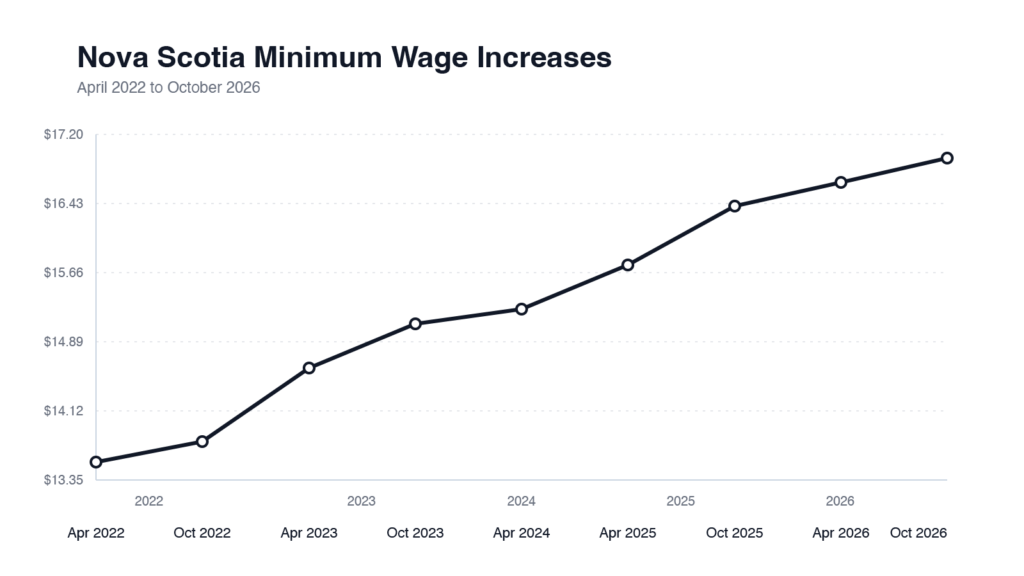
The increases are based on the unanimous recommendation of the Minimum Wage Review Committee, which includes representatives from both employees and employers.
In addition to raising the minimum wage, the provincial government points to a series of affordability measures aimed at supporting Nova Scotians and encouraging workforce participation.
These include cutting the HST and increasing the basic personal amount to $11,744 from $8,744—meaning every Nova Scotian can earn an additional $3,000 tax-free.
Other measures include making the Heating Assistance Rebate Program permanent at $400 annually, investing $1.7 billion through the government’s five-year housing plan, Our Homes, Action for Housing, increasing income assistance and indexing it to inflation, and expanding skills training and workforce development programs.

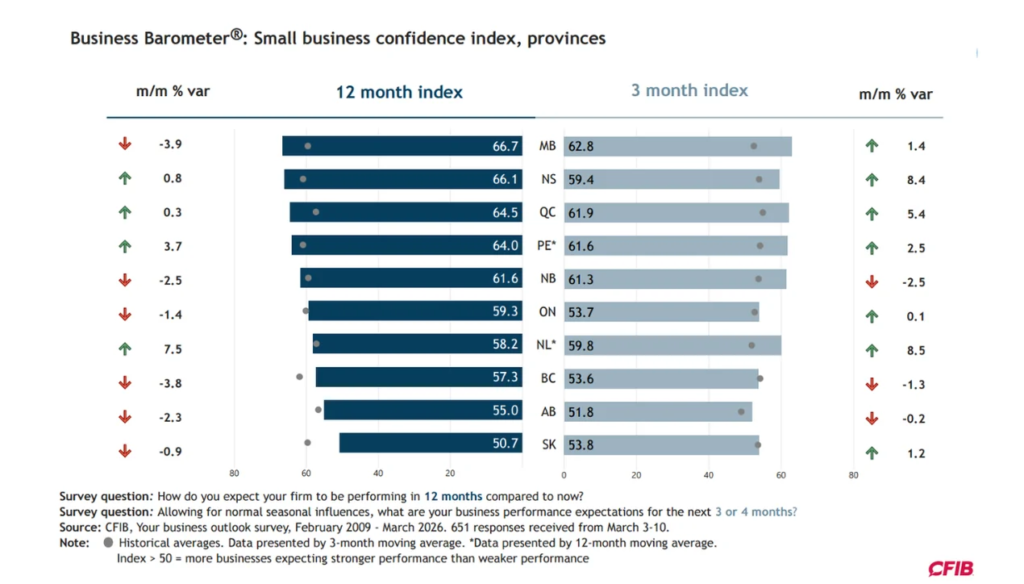
Nova Scotia’s small business community is showing renewed optimism, ranking second highest in the country for confidence, according to the latest Monthly Business Barometer released by the Canadian Federation of Independent Business (CFIB).
The March 2026 report highlights a notable shift in sentiment among small and medium-sized enterprises (SMEs), with Nova Scotia emerging as one of the strongest-performing provinces in Canada. The CFIB’s Business Barometer is a widely followed indicator that measures business owners’ expectations for their performance over the next 12 months, with scores above 50 indicating optimism.
Strong showing despite national dip
Nationally, small business confidence declined in March, with the long-term index falling to 55.8 and the short-term outlook also weakening.
However, Nova Scotia stood out as a bright spot, maintaining relatively strong confidence compared to most other provinces. Provincial trends showed that while many regions experienced declines, Nova Scotia saw stable or slightly improved sentiment, helping it secure a top-tier ranking nationwide.
Atlantic resilience
The Atlantic region continues to demonstrate resilience, with Nova Scotia’s performance reflecting a broader trend of cautious optimism among local entrepreneurs. Earlier in 2026, confidence levels in Nova Scotia were already among the stronger in Canada, with business sentiment climbing alongside provinces like Quebec and New Brunswick.
Outlook
While uncertainty remains in the broader economic environment, Nova Scotia’s strong ranking signals confidence in future growth and stability. As CFIB’s latest data shows, Nova Scotia’s entrepreneurs are not just weathering current challenges—they are positioning themselves as among the most optimistic in the country heading into the year ahead.
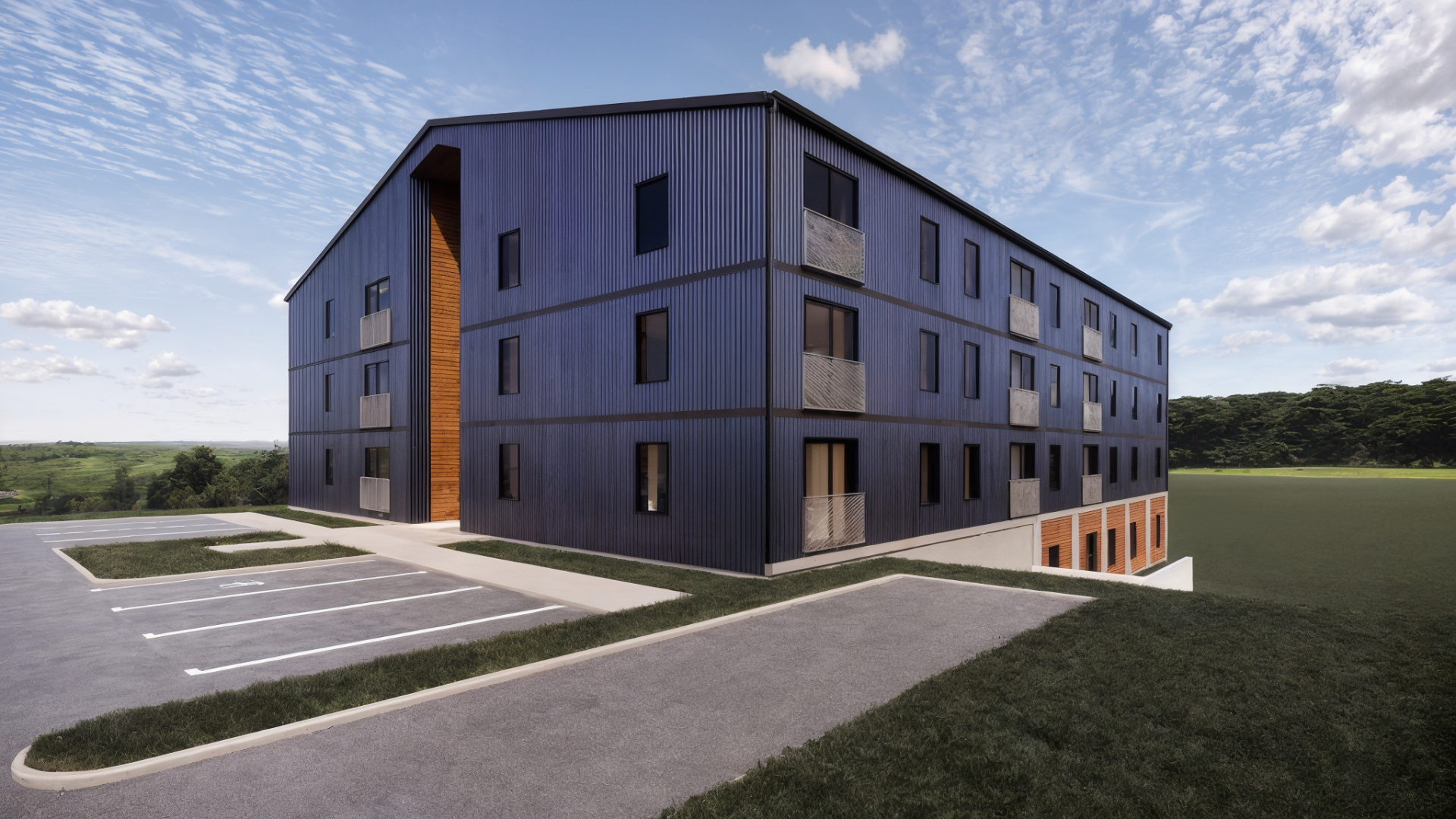
The landscape of affordable housing in Pictou is seeing a significant shift as construction begins on a new 27-unit development on Beeches Road, part of a broader provincial effort to increase long-term housing stability.
The announcement was made Friday by Marco MacLeod, MLA for Pictou West, on behalf of Housing Minister John White. The Beeches Road project, a partnership between the Province, the federal government, and the Tidal Bay Community Land Co-operative, aims to provide a mix of market-rate and permanently affordable homes.
More housing is on the way for Pictou, and more residents will soon have a place to call home.
— Tim Houston (@TimHoustonNS) March 21, 2026
Our government is proud to support the construction of a new 27-unit development on Beeches Road, including 11 homes that will remain affordable permanently, helping provide long-term… pic.twitter.com/cm7LH49X0w
Stability Through Affordability
Of the 27 units currently under construction, 11 are designated as permanently affordable. This unique structure ensures that these homes remain accessible for generations, rather than expiring after a set number of years.
“Each new home strengthens our community, and these 27 units are more than a construction project – they are future homes for people in Pictou,” said Pictou West MLA MacLeod. “By working with our partners, we’re helping to give people a home where they can build their lives, raise their families, and stay connected to the community they love.”
The financial breakdown for the Beeches Road development includes:
- Federal Government: $9.4 million via the Affordable Housing Fund.
- Province of Nova Scotia: $1.639 million via the Affordable Housing Development Program.
- Tidal Bay Community Land Co-operative: $390,958.
Rent for the affordable units is set at $785 for one-bedroom, $912 for two-bedroom, and $1,140 for three-bedroom units. Notably, these rates are inclusive of electricity, heat, hot water, laundry, and parking.
Stonehouse Manor
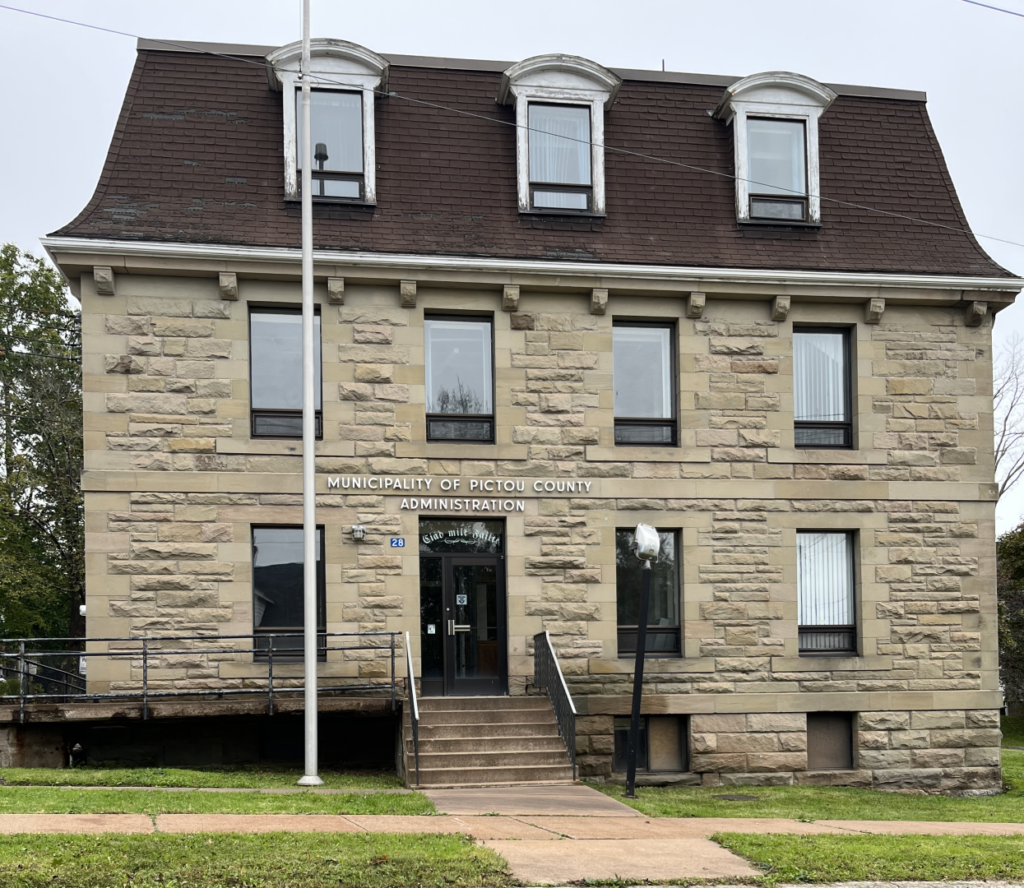
The announcement also highlighted the completion of Stonehouse Manor, a 132-year-old historic municipal building in downtown Pictou that has been repurposed into 15 residential units.
The conversion, which is already fully occupied, provides 10 affordable units. This project was made possible through a $1 million provincial contribution, $1.3 million from the federal government, and $237,350 from the Nova Scotia Co-operative Council.
The dual announcements represent a multi-million dollar investment aimed at addressing the diverse housing needs of the North Shore, blending historic preservation with modern new builds.


